
Adorno treated en canaille
Meanwhile, the Choc is off, and the highbrow has established itself in many places as an unadventurous lowbrows‘ cultural advocate.
Theodor W. Adorno, answer to Horst Koegler, Collected writings Bd. 18, p 804
By Thomas Ziegner
Surely Kurt Weill, who liked to use colourful swearwords, had every right to a juicy expletive against Theodor W. Adorno; in a letter 1942 the composer complained more politely about the philosopher‘s arrogance and ignorance – whereby Weill still paid tribute to the thoughtfulness and integrity of Adorno.
So if Weill had every right, post-born musicologists and musicians should think a little more before venting their resentment against the philosopher, who is sometimes too much in favor of their thinking power, by (not only) the virtue of his artificial style. Yes, it is sometimes exhausting to read Adorno, yes, he spurns a brisk journalistic writing. Yes, his writings successfully resist their clear presentation by means of decimal structure, with good reasons. Yes, he is demanding and sometimes you feel overwhelmed. And his thoughts on jazz and on the cultural industry in general have often led to intellectual-pietist-minded readers having a bad conscience as soon as they enjoy a record by Louis Armstrong or a movie starring Humphrey Bogart. Just “Viva Maria” with the Bardot and the Moreau went through without conscience-pain, because it also told something of a revolution … Adorno so was imagined as the sinister, animal-serious spoilsport.
Of course he was not really that; it is certain that he liked to play hits and operetta on the grand piano. He reportedly helped the jazz vibraphonist Karl Berger to a New York stay, knowing that he hoped to bring his jazz musical skills up to date there.
It goes without saying that his note, which he published in 1956 on the occasion of the performance of Weill’s “Street Scene” in the program of the Düsseldorfer Theater, was not really helpful. But it is hard to prove that this note “sabotaged the reception”, as was said. Naturally, Adorno formulated with some justification that Weill was less a composer than a “music director”. Broadway’s practice of “tryouts” proving in the provinces (for New Yorkers, province it’s all outside of their city, even Boston), and sorting out numbers with supposedly little attraction, means that the emphatic term of „Werk“ (work), Adorno drew of Beethoven’s Oeuvre, cannot be used for this Broadway team work.
Welcome verdicts parroted by journalists
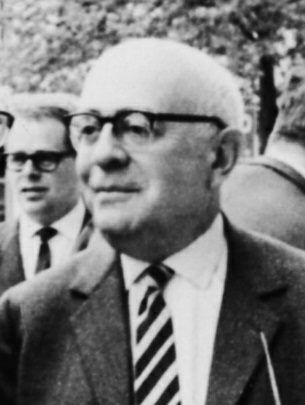
Theodor W. Adorno
Foto Jeremy J. Shapiro, wikicommons
People like to forget (or do not know or even do not give a damn like the journalists who parrot the most welcome verdicts of the musicologists; whoever does it again will be spanked) that Adorno, a pupil of Alban Berg, composed himself. Anyone who is proficient in music reading and can play a little piano should try the “Sept Chansons Populaires Francaises” of the philosopher. After his retirement, he wanted to settle in Vienna and establish there as a composer. Weill worked in his year of death on an opera on Twain’s “Huckleberry Finn”, Adorno left fragments just to that substance (Walter Benjamin had advised him against).
Horst Koegler, also working for the Stuttgarter Zeitung, clearly contradicted the aristocratic arbiter elegantiae Adorno in 1956. Anyone who confounds his critical theorems on popular music and its sphere with the snooty attitude of the anti-Americans, who damn pop music, hits, rock music and comics during the 1950s, has understood nothing of Adorno. Koegler did not really disprove him; this is still pending and should only succeed if one considers the reflections on the term of the “Werk” contained in “Aesthetic Theory”, the “Negative Dialectic” and elsewhere. The ideas of the musicologist Peter Sühring, who considered that Adorno had longed for “the transformation of music into philosophy” (continuity problems in German musicology, p. 141 ff), are helpful in substantiating a criticical discussion of Adorno’s aesthetics.*
Certainly not helpful, rather negligent is the undeserved accusation that Friederike Wißmann Review of “Deutsche Musik” in the manner of half-informed left green-alternative social educators in her otherwise almost consistently readable book “German Music”, that we have presented here yesterday, raises: The philosopher’s “general refusal of consumption of (pop)-music is problematic because Adorno makes those people small, who like the hits”(p.134). This is a tough, let’s say, Convenu, which meets less Adorno than the vicious producers of the now almost factory-like, from all the best-selling items together smeared Schmarren. Wissmann’s statement would have to be refuted with a hundred quotes. Here is one: “Culture which, in its own sense, was not merely for the sake of man, but always objected to the hardened conditions in which they live, and thereby honored men, becomes in by adjusting them completely to the hardened conditions, reintegrate and humiliate people once more” (Adorno, Ohne Leitbild, 1967, p. 62).**
Hysterically, finally, appears the furious text that a few years ago (2015) a certain Dr. Kevin Clarke wrote, almost whining at the “grim over-father” Adorno. who, the enraged scholar continued, had “brainwashed” the German Kulturwortler* (not Clarke, but me, th.z.; something like writers, junkdealers) so that they did not sufficiently appreciate Clarke’s beloved operetta. Gisela von Wysocki has clearly answered Dr. Clarke with maternal forbearance. Gisela v. Wysocki calms Dr. Clarke
And she gives valuable hints: “A hymn to the operetta be given by Th.W. Adorno you should not expect. As an essay of him might have looked like, you can still guess. In this context, the text on Franz Schubert (1923) is instructive, which puts the “potpourri” in the center. A treasure trove is the work on Franz Schreker (1959), whose music in its “unbridled desire for fortune,” it is said, beats the “great” art music of the field. The whole thing ends with the sentence, “The profession of Schreker’s father would be the true title of the opera he never wrote: the photographer of Monte Carlo.” That could have been the title of an operetta.
*Peter Sühring: Kontinuitätsprobleme in der deutschen Musikwissenschaft.Ein Abgesang
**Now in Adorno, Gesammelte Schriften Bd. 10.1, p 338
***„Kulturwortler“ are dramaturges, journalists, publicists, in short, the whole Gschwerl, including us, Brouillon.
Cf.: Adorno on Kurt Weill
A very amusing compendium of “nasty comments” about Adorno gives James Schmidt, Professor of History, Boston University, in his Blog
Persistent Enlightenment:Hating Adorno-A Brief Compendium of Nasty Comments
(revised 21.5.18)